Saturday, December 8, 2012

(English Paper) Video Games as an Art Form


Jalal “JJ” Hajeer
Instructor: Greg Bryant
November 28, 2012
Video Games as an Art Form
            The subject of games as art has been much debated in the last couple of years. It is not unusual for new mediums to be accused of lacking artistic merit by those outside, and even some inside, the medium. Other mediums, such as film and literature, have had their merit as ‘art’ questioned at one point or another. Indeed these discussions should take place for any medium to grow and understand itself as a whole, but I believe just saying, “This will never be art or have the potential to be art” is something we all should avoid when discussing new budding mediums.
Games as art, however, is not the main subject of this paper as both my friend Chris and I believe games are indeed art. Where we differ in opinion is whether games are their own art form or the sum of other art forms.
In my opinion, games use interaction as well as visual and other traditional methods of story-telling to elicit emotions and provide unique experiences that one would not get from visual or text alone. I believe that games provide these experiences and emotions in a way that sets them apart from related mediums to the point where games become their own art forms rather than extensions of the other existing forms of art.
Chris, however, believes that games are not works of art by themselves but rather are extensions of the other forms of art. The example he uses to describe his opinion is that games are more akin to movies just as choose-your-own-adventure novels are akin to books.
In response I asked if movies themselves were not but pre-record theater-plays and then stated that I believe that games combine artistic elements in such a way that a game forms an experience that is not present in the other mediums alone. The example I then used was of tabletop Role-Played Games (RPGs) which one could assert are a mixture of writing with acting and some math sprinkled in. This mixture brings out a unique experience that is not available from those mediums separately.
To counterpoint this, Chris brought up that film expands upon theater, presents story telling possibilities that are not possible with theater because of the limits of environments in theater and provides the ability to control what the viewer perceives. To refute my example of tabletop RPGs, he asserted that there are choose-your-own-adventure books that are set up to mimic the table top experience but with a lesser degree of control to the player/reader.
Getting back to the point he had made earlier about games being more akin to movies, I stated that I could see games like Metal Gear that use cut-scenes as the main progression of their stories being akin to movies, but a game that uses other ways of creating a story such as the play itself and the game's environment differs greatly from movies. In addition, some games do not necessarily have a story, but they can still bring out emotions in a player without using a narrative plot.
To refute my point, Chris stated that those games would be more like silent film or independent films in that there may not be a straight forward narrative, but rather these films relies upon ambiguity, where the overall experience is left to the interpretation of the viewer.
By the end of our discussion, I still believed that games are indeed their own art form but came out of the discussion with plenty of ideas to think about on the topic. Truly I do not believe that the argument on whether games are art or not is the discussion people should be having anymore. Instead the new question is whether or not games are an art form all to themselves or a medley of other works of art.


Cited
Chris Mrkvika, Skype Chat. November 25, 2012


Thursday, May 3, 2012

Sniper Elite V2 Review: Headshot Heaven

Game: Sniper Elite V2

Developer: Rebellion

Genre: Third-Person Shooter

System: PC

Rating: M (Blood, Gore, Intense Violence)


In most shooters the sniper rifle is confined to specific areas or used as a secondary gun to an assault rifle or other weapon on the main character’s person. Sniper Elite V2, on the other hand, mixes the ordinary formula up by making the sniper rifle your primary weapon throughout the game.


Gameplay: Sniper Elite V2 incorporates a lot of elements commonly found in most shooters these days, like regenerative health and cover based shooting, with some elements from the Stealth genre. As the name Implies, Sniper Elite V2 focuses heavily on the use of your sniper rifle over other weapons.

The Sniping in V2 requires you to be more strategic in where you fire your shot since gravity, wind speed and whether or not you’re holding your breath when you fire has an effect on where your bullet will land on a target.

Playing V2 in the same manner as other shooters is not a good idea since rushing into a group of enemies is always a guaranteed way of killed. Finding good sniping positions, setting up traps and sneaking up behind enemies and taking them out quietly with your Welrod pistol are useful strategies to execute before you go loud with your sniper rifle.

Though it’s nowhere near as bad as it was in the first game, the A.I. can be a bit sporadic at times. This can be annoying if you’re trying to stealth through most of the game.

The PC version of the game, unfortunately, has a slight lag when there are too many enemies attacking you at once. While this is more of a minor annoyance, it is still irritating when I look back at the demo and how smooth it ran even when there were a bunch of enemies on the screen at the same time.


Visuals: Graphically, V2 goes for the standard “Realism” look but provides enough colors and contrasts here and there to liven up the basic brown background.

One of Sniper Elite V2’s key features is a particularly detailed and gruesome kill cam that activates when you get a well-placed shot on a target. V2 is not for the squeamish or weak stomached out there. Each successful kill cam is incredibly brutal in details and can range anywhere from a bone breaking head shot to the dark humored, if not cringe inducing, “Gonad shot.”


Sound: The soundtrack is phenomenal, and musical cues are particularly useful when you want to know if someone has found you out or when you have finally killed the last enemy that was hounding you at the time.


Final Thoughts: Sniper Elite V2 manages to bring a feature that is normally considered a secondary weapon in most games and create an incredibly enjoyable experience around it. There are a few slight flaws here and there, but timing a shot to the sound of a falling bomb, firing and then watching the bullet in action provides a uniquely satisfying experience that cannot be found in other shooters.

9/10

Thursday, April 26, 2012

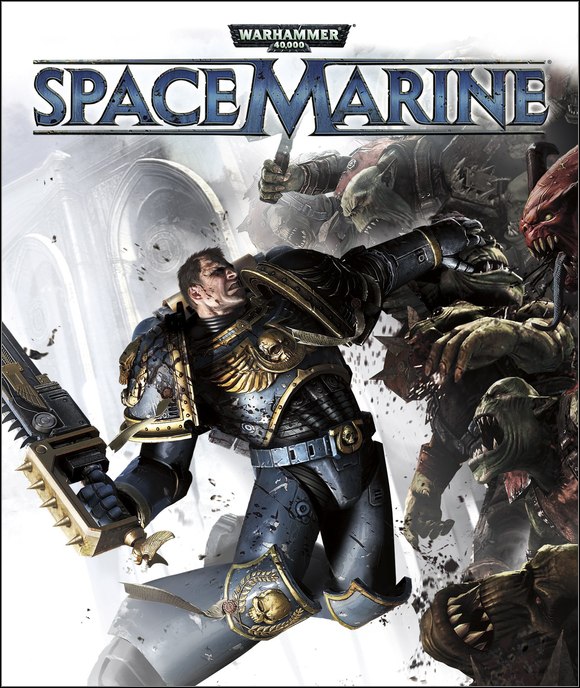
Warhammer 40,000: Space Marine Review


Game: Warhammer 40K: Space Marine

Developer: Relic Entertainment

Genre: Third-person shooter, Hack and Slash

System: PC

Rating: M (Blood, Gore, Violence)


At first glance Warhammer 40K: Space Marine may look similar to Gears of War, but once you start up the game, you realize that Space Marine is vastly different from Gears in many different ways.

Gameplay: Where Gears of War has you constantly hugging chest-high walls and taking pot shots as enemies pop up to shoot back at you, Space Marine focuses more on moving around, getting into the middle of the fray and up close and personal to anything unfortunate enough to get in your way.

Combat mixes Third-Person shooting with Hack and Slash gameplay satisfyingly. None of the weapons feel underpowered, and being able to switch between a Bolter to a melee weapon and then to a sniper rifle while in the middle of a fight never gets old.
My only big gripe with the game is having to do special melee executions on enemies during combat in order to heal. While it is a novel concept as opposed to hiding behind cover as your health regenerates, it doesn’t work that well in practice. Being low on health and then getting killed by a couple of Ork foot soldiers when you are in the middle of a takedown can be pretty annoying at times. It doesn’t actually break the game, and if you aren’t too reckless, you won’t be dying a lot from this, but it definitely could have been designed better.


Visuals:  Space Marine uses the standard brown environments with the addition of some blue from the Space Marines, some green from the Orks and some red from all of the blood that flies around.


Story: The story isn’t exactly sophisticated. You’re sent downworld in order to free the planet from an Ork invasion. If you haven’t had any other experiences with the Warhammer 40K series, you may find all of the terms and references confusing. I had only played Dawn of War 2, so I only understood about half of what everyone was saying, but it’s still easy enough to follow what’s going on.


Sound: The sound design on the weapons is excellent and satisfying. The soundtrack is pretty enjoyable and gets the blood pumping at just the right moments.


Final Thoughts: Warhammer 40K: Space Marine excellently mixes Third-Person shooting with Hack and Slash melee combat which creates an enjoyable experience that is only hindered by its unfortunate healing system. As length goes it’s only around 7 hours long with a few hidden audio logs and some Jump Pack segments to break things up now and again. However, it’s well paced enough that it doesn’t make you feel empty at the end.


8.75

Saturday, February 11, 2012

S.T.A.L.K.E.R. Call of Pripyat Review: A Wasteland Paradise


Game: S.T.A.L.K.E.R. Call of Pripyat


Developer: GSC Game World


Genre: FPS, Open World, Survival


System: PC


Rated: M (Blood, Language, Use of Alcohol, Violence)


As you may know, I am a huge fan of Metro 2033. Some of you are probably tired of me constantly gushing about it over twitter. Anyway I recently decided to play the other video game series about a post-apocalyptic Russia ravaged with mutants and radiation, the S.T.A.L.K.E.R. series. Specifically for this review I have played the 2nd game, Call of Pripyat.

Gameplay: As mentioned above, Call of Pripyat ditches the hub-based world of Shadow of Chernobyl for a much more open-ended map divided into three different sectors. This vastly reduces the amount of time the player spends in loading different areas and makes the experience much more enjoyable. The map isn’t that hard to traverse, and it usually won’t take you long to get from one end of a sector to the other.

Gunplay is satisfying, and each weapon handles differently from the next without actually feeling underpowered or overpowered. Guns tend to empty fast, so you’ll have to scavenge what you can from the dead, and having several weapons that use different rounds is always a good idea.

Another new addition Call of Pripyat brings is the ability to customize and improve certain aspects of your weapons and armor at local gunsmiths. These upgrades can vary from increasing how a weapon handles to how accurate or how fast it is to how much your armor protects against bullets or environmental hazards. If you want some of the better upgrades though, you’re going to have to look for toolkits. The toolkits aren’t particularly marked on the map, so you may have to ask around to find them all.

A good way of making money is looking for artifacts in anomalies. Artifacts, besides being worth a lot of money, provide bonuses like giving health regeneration or increasing your maximum weight limit but are also radioactive, so you will most likely want to find a firefly or bubble or other anti-radiation artifacts before you equip any other type of artifact. The process for finding artifacts is, at first, a game of hot and cold, and the artifacts are usually right by deadly anomalies. Eventually you get better detectors which make finding artifacts a heck of a lot easier, particularly if you do a certain side quest that nets you a detector which shows the locations of anomalies as well as artifacts

Story: The story in Call of Pripyat follows Alexander Degtyarev as he goes undercover as a S.T.A.L.K.E.R. in order to investigate why five helicopters the military sent into the zone crashed without warning. The main story-line in and of itself isn’t particularly interesting, and the conclusion near the end was woefully unsatisfying. I did find finishing each side quest to be incredibly more satisfying. Listening to the epilogue at the end telling you how your decisions affected the zone will both make you proud that you helped Beard and the Stalkers out in Zaton instead of helping Sultan and make you despise yourself for not killing off that hive of Bloodsuckers when you had the chance.

Final Thoughts: S.T.A.L.K.E.R. Call of Pripyat is a fun game. Its story isn’t going to win any prizes and the conclusion near the end really was a disappointment, but the side quests and gunplay are good enough to more than make up for it. Even if you aren’t the type of person that has to finish every single quest before moving on with the main storyline, I can guarantee you will have finished a good majority of them by the end of the game.
9/10